Prepare for July AML/CTF changes with Reapit Verify for real estate
New AML/CTF rules are coming in July. Discover how Reapit Verify helps real estate agencies manage customer due diligence, risk assessments and compliance securely within Reapit Sales.
With July fast approaching, real estate agencies are only a few months away from their new AML/CTF obligations coming into effect. By this stage, agencies should be well underway with preparations, including preparing their AML/CTF program, identifying their Compliance Officer/s, training staff and considering the technology they will use to support compliance.
Technology will play a major part in ensuring an agency’s obligations are met consistently. That’s where Reapit Verify comes in - a solution built natively into the Reapit ecosystem to give agencies a unified, secure, end-to-end AML/CTF experience - without juggling multiple platforms or subscriptions.
Why Reapit built Verify for real estate
AML/CTF technology already exists - because AML/CTF obligations are already in place for other entities like banks and gambling services. So why would you choose Reapit Verify over one of these other providers?
Reapit Verify is different because it’s built for real estate from the ground up - Customer due diligence begins where the relationship starts: in Reapit Sales. Your agents can initiate and monitor checks in real time from the CRM, with high-risk alerts flowing automatically to compliance officers in the Reapit Verify module.
By keeping all AML/CTF activity inside the same secure ecosystem your agency already uses, Reapit Verify ensures:
- Data stays protected within a single, controlled environment
- No double‑handling or re‑keying of sensitive customer information
- Real‑time visibility across every check, every alert, every transaction
- Nothing falls through the cracks during busy sales cycles
- A defensible audit trail that stands up to regulator scrutiny
How it works
Let’s start in Reapit Sales
With Reapit Verify, customer due diligence begins in Reapit Sales. Agents can initiate checks in Reapit Sales, and monitor these checks in real time from the CRM. Reapit Sales will also warn the agent when they try to publish a listing to a portal to confirm all vendors have been verified.
.png)
Risk management
Once the verification is complete, the sales agent starts the risk assessment from Reapit Sales. This opens a set of agency‑controlled questions to answer in Reapit Verify, and a risk level of low, medium or high will be assigned based on the answers.
.png)
High-risk situations
Anything that requires escalation is automatically flagged for your compliance officer, who can easily generate and download Suspicious Matter Reports (or SMRs).
.png)
Detailed & high-level views
Each case has its own dedicated details page, which captures outcomes, status, verifications, risk assessment, documents, notes, reports and a detailed timeline of activity for audit purposes.
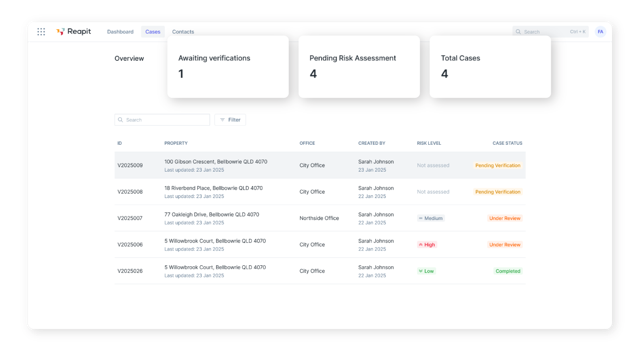
At a high level, compliance officers have the Reapit Verify Cases page, where they can easily track verifications, risk assessments and statuses across one or multiple offices, depending on your setup.
Why agencies are choosing Reapit Verify over other providers
Reapit Verify is designed specifically for real estate, not retrofitted from another industry. Its native integration with Reapit Sales means:
- No extra systems or subscription costs
- No duplicate data entry
- No messy handovers when transactions need to be escalated
- No risk of sensitive information leaving an agency’s owned database
All customer and agency data stays within the Reapit platform, keeping sensitive information secure.
We’re now scheduling starts with Reapit Verify from May - to secure your onboarding window and ensure compliance by July, head to this form.
If you’d like more information, you can:
- Learn more about Reapit Verify here.
- Register for our live webinar on March 26th, where we’ll talk through what agencies should do before July 2026.
- Schedule your start with Reapit Verify to learn more about Reapit’s nominated AML/CTF Training and Consultancy partners who are available to assist your agency.
This information is provided for general guidance only and does not constitute legal or professional advice. For specific compliance requirements, we recommend consulting a qualified legal or compliance professional.
see more blogs
Related content