Where does momentum get lost between appraisal and settlement?
See where real estate sales can lose momentum between appraisal and settlement, and how better follow up, buyer management and vendor updates can help.
A good appraisal on Friday afternoon can feel pretty promising.
A vendor seemed keen.
You got along well.
They liked what you had to say and you left thinking there was a decent chance the listing would be yours.

Then Monday happens.
There are new enquiries waiting, an open home to prepare for, buyers who need calling back and another appraisal in the diary.
That Friday conversation suddenly feels a lot further away.
Most agents know how to sell a property.
Keeping every opportunity moving when you’re managing several properties, vendors and buyers at once is where things can get messy.
There are a few points between appraisal and settlement where that tends to happen.
The appraisal went well. Now what?
An appraisal isn’t a listing yet.
You might have one vendor who’s ready to move now, another who wants you to call next month and another who’s waiting for a proposal.
Then there’s the person who seemed really keen at the appraisal but hasn’t returned your last call.
Keeping track of those conversations in your head gets difficult pretty quickly.
The useful question each morning is:
Who do I need to follow up today?
That’s where having a clear view of your appraisal opportunities helps.
You can see what’s happened, what you’ve promised to do and what needs attention next.
Tasks and activity schedules can help with the smaller things too.
If you said you’d called Michael next Tuesday, you shouldn’t need to remember next Tuesday.
When the vendor is ready to move, the same info can follow through to the proposal, listing preparation and eventually the live listing.
Great, you’ve won the business.
Now you actually have to sell the house.
The open home finished at 11:30. What happened at 11:31?
Twenty groups came through.
One buyer asked about settlement dates.
Another wanted the contract.
A couple thought the price was high.
Someone else came back through the kitchen for a second look before they left.
By Monday, those conversations can start to blend together.
Who needs a call?
Who asked for more information?
Who has already inspected twice?
Who seemed interested enough that you should probably call them first?
Then your vendor calls.
“How did the open go?”
“The open went well” only gets you so far.
Telling them several buyers raised the same concern, one has requested more information and another wants a second inspection gives them something useful.
This is where the information collected during a campaign starts earning its keep.
When inspection activity, buyer follow up and feedback are recorded as you go, you’ve got something to work with when it’s time to update the vendor.
You’re not trying to piece Saturday morning back together from memory.
And somewhere among those buyers might be the person who eventually makes an offer.
Someone wants to make an offer
This is obviously the bit everyone wants.
The buyer is serious.
The vendor is interested.
There’s finally a deal on the table.
But an offer doesn’t appear out of nowhere.
The buyer may have first entered your database weeks or months earlier.
They might have saved requirements, enquired on other properties or inspected before.
When a listing goes live, matching it against buyers already in your database can help you spot those connections sooner.
During the campaign, each inspection, conversation and piece of feedback adds a little more context.
By the time someone is ready to make an offer, you don’t want to be digging through emails or trying to remember what they told you at the open home three Saturdays ago.
You want the story so far.
Offer accepted. Job done?
Almost.
But don’t crack the champagne just yet.
There’s still a fair bit to happen between an accepted offer and settlement.
The offer needs to be recorded.
The purchaser needs to be verified.
Sales advice needs to go out.
There’s the initial deposit and the move from conditional to unconditional.
Eventually, you get to settlement.
This part of the sale has its own version of the same problem we saw after the appraisal and the open home.
What needs to happen next?
When everyone involved can see where the deal is up to, it’s much easier to answer.
That might sound like a small thing, but think about a week where you’ve got one property under offer, another waiting to go unconditional and another settling on Friday.
You probably don’t want the status of all three living on a post-it note.
Settlement isn’t really the end either
The keys change hands.
The SOLD sticker has done its job.
Everyone moves on.
Well, sorta.
You’ve now got a past vendor who knows what it’s like to sell with you and a purchaser who owns property in your market.
Today’s buyer could be someone you conduct an appraisal forin a few years.
A happy vendor might refer a neighbour.
Someone who isn’t moving again anytime soon might still want to know what’s happening to property values in their area.
So rather than letting those contacts disappear into the database after settlement, you can keep the relationship going.
Updating contact details and setting future anniversary activity gives you a reason to get back in touch later.
No awkward “Hi, remember me from four years ago?” required.
So, where does momentum actually get lost?
Usually somewhere pretty ordinary.
A follow up that was meant to happen on Tuesday.
Buyer feedback wasn’t recorded.
A vendor update that meant pulling information together froma few different places.
An offer where you’re not quite sure what’s still outstanding.
None of those things sound dramatic.
That’s kind of the point.
A sales process is made up of hundreds of small actions.
The easier it is to see what’s happened and what needs to happen next, the easier it is to keep a property moving from appraisal to settlement.
That’s also what we’re exploring in our upcoming webinar series.
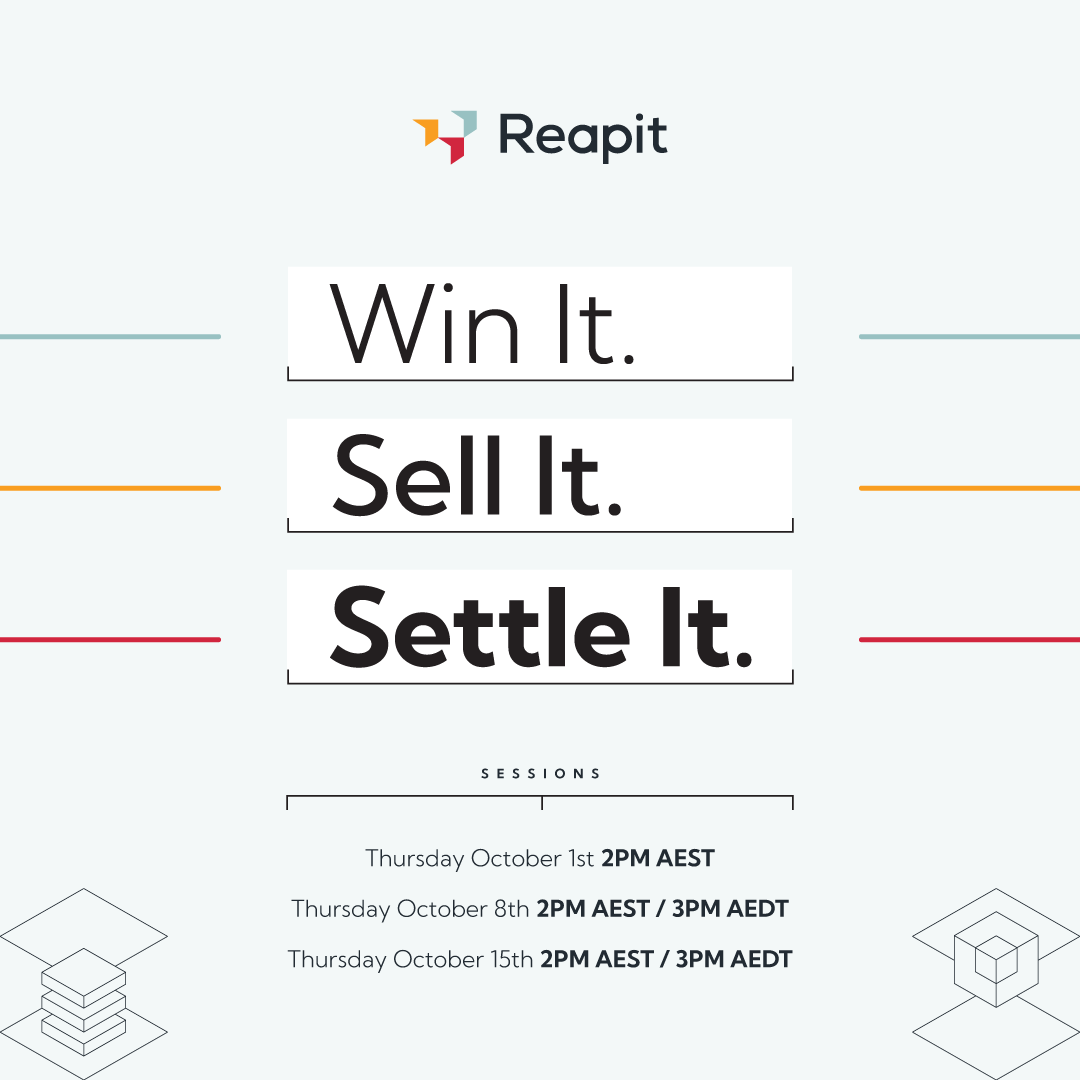
Win It. Sell It. Settle It.
In our free three-part series, we’re following one property through the whole sales journey.
Across the three sessions, we’ll follow what happens next:
WIN IT: Getting the Listing
See how the agent manages the appraisal opportunity, follows up, creates the proposal and gets the vendors property ready to go live.
SELL IT: Running a Successful Campaign
Follow the campaign through inspections, buyer enquiries, follow up feedback and vendor reporting.
SETTLE IT: Closing the Deal & Settlement Process
See what happens when an offer comes in, through purchaser verification, sales advice, deposit and settlement, plus what happens to those relationships afterwards.
We’ll look at what agents should be doing at each stage, while also showing you how to put into practice using Reapit Sales.
Register once for all three sessions and join live or watch on-demand.
see more blogs
Related content